How to Choose a 16ft Off-Road Caravan — The Australian Buyer's Guide
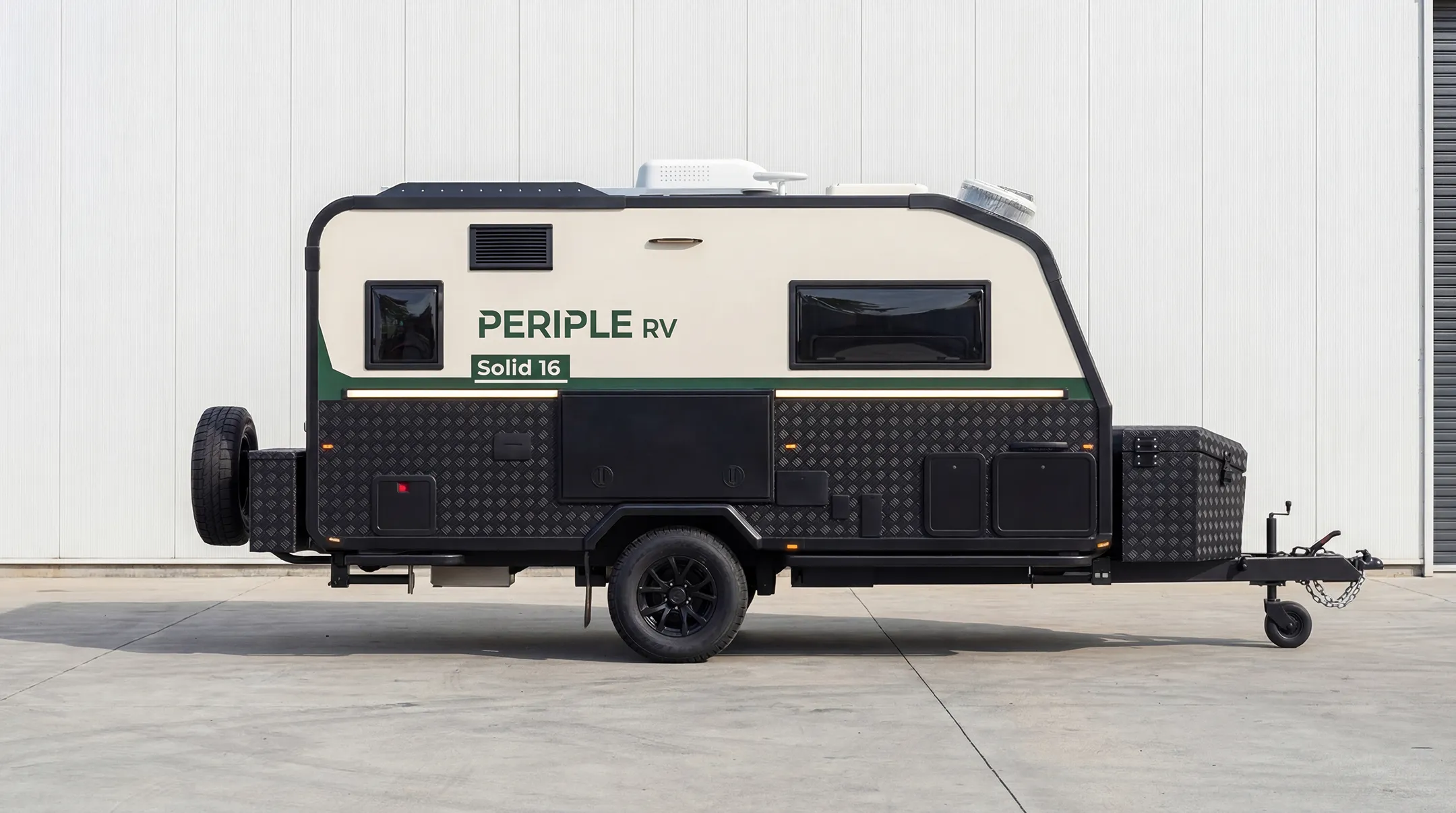
Sixteen feet is a size that experienced Australian tourers tend to arrive at through hard-won trial and error — usually after a smaller van that felt cramped on a long trip, or a larger one that turned every tight track and national park loop into an ordeal.
It's enough van to live in properly. A real kitchen. A full-size bed. A decent bathroom. All the gear you actually need for extended touring. Yet it's light enough to be towed by a well-specced ute or wagon, and short enough to fit where the good spots actually are.
This guide covers everything worth knowing before you buy a 16ft off-road caravan in Australia — from matching your tow vehicle to navigating a caravan show, and why this size suits such a wide range of buyers.
Why 16ft? The Case for This Size
For Couples
A 16ft van gives a couple everything they need without the excess they don't. A proper queen/king bed. A full kitchen with enough bench space to actually cook. A bathroom that doesn't become a source of tension after a week off-grid. And enough storage to keep the living area genuinely tidy for weeks at a time.
Those who do serious long-distance touring — the Simpson, the Gibb, three months around the country — consistently say 16ft is the minimum they'd go back to. The extra couple of feet over a 14ft van make a real difference to comfort on an extended trip, without the running costs and manoeuvrability headaches of a 19ft rig.
For Small Families
A well-laid-out 16ft van can genuinely sleep a family of three or four, particularly with rear bunks or a fold-out bunk configuration. For families with younger kids doing regular school holiday runs, it's often the most practical choice: manageable behind a single or dual-cab ute, easy to set up and pack down, and affordable enough that you're not sacrificing the budget for the trips themselves.
For Retirees and Grey Nomads
The grey nomad market has driven significant demand for the 16ft segment, and for good reasons. It's a size that can be managed solo if circumstances require it on the road. It's comfortable enough for months at a time rather than weeks. And it's towable by the well-specced SUVs and utes that many retirees already own — no heavy-duty truck required.
"The 16ft sweet spot: big enough to live in properly, small enough to go where the good spots actually are."
Matching Your Tow Vehicle
This is the most critical step in the buying process, and the one most commonly skipped. Many buyers choose the van first and discover their vehicle isn't up to it later — sometimes on a steep outback descent.
The Numbers That Matter
Before committing to any 16ft caravan, you need three figures from your tow vehicle's handbook. Not from a forum. Not from a dealer. From the handbook:
- 1.Towing capacity (ATM):The maximum weight the vehicle can legally tow.
- 2.Tow ball download limit:How much downward force the ball can handle — typically 180–350kg.
- 3.Tare Mass:The weight of the van as it leaves the factory (empty).
- 4.Payload:The maximum weight you can legally add to the van before it exceeds the certified safety limits.
Your van's ATM should sit at no more than 85–90% of your vehicle's towing capacity. A van at the absolute limit will stress the vehicle, reduce braking performance, and create a genuinely dangerous situation when you're also carrying a full load of camping gear.
Body Construction: What the Van Is Made Of
Aluminium Frame with Composite Cladding
This is the most common construction type in Australia and covers a vast range of quality. At the low end, aluminium H-frame construction flexes on corrugated roads, allows moisture ingress at joins, and corrodes over time. The problem: from the outside, you often can't tell the difference between well-made and poorly made aluminium framing — until something fails on the road.
Fibreglass Composite Sandwich Panels
Sandwich panel construction — a structural foam core bonded between fibreglass skins — offers genuine advantages. The panel itself is the structural element, so there are no joins for water to find. It's lighter, insulates significantly better, and it doesn't corrode.
The Periple 16 Solid uses a full fibreglass composite sandwich panel body for exactly these reasons. After years watching what happens to aluminium-framed vans on long-haul Australian touring, the decision wasn't a close call.
Suspension: The Difference Maker
Australian corrugated outback roads punish caravans in ways that European testing simply doesn't replicate.
- Leaf Spring Suspension
Standard leaf spring remains the baseline. It's robust and simple, but the van tends to skip and bounce on corrugations, transferring enormous forces to the chassis.
- Independent Suspension
Allows each wheel to respond to the road independently. On corrugated tracks this is a genuine game-changer: smoother ride, less chassis flex, significantly less stress on everything from the hitch to the kitchen cabinetry.
"If a 16ft van is marketed as off-road capable but runs leaf spring and budget shocks, it's not a genuine off-road van — it's a road van with a bash plate."
Power Systems: Touring vs Camping
In 2026, lithium and solar is the standard. For a 16ft van, 300W of roof-mounted solar is a realistic starting point. 400–600W is more comfortable if you run air conditioning or a compressor fridge.
Lithium iron phosphate (LiFePO4) batteries hold a deeper usable charge — typically 80–100% usable versus 50% for AGM. For a 16ft van, 100–200Ah of lithium is workable for most couples.
Price Ranges: What to Expect in 2026
Entry-level. Typically aluminium H-frame, leaf spring, and AGM batteries. Adequate for occasional use but not heavy outback touring.
The competitive segment. At the upper end, you find fibreglass composite construction and full lithium power as standard.
Premium and semi-custom builds. Custom cabinetry, larger power systems, and extensive warranty support for full-time touring.
Caravan Show Checklist
Before you sign at a show, run through this list:
- Tow vehicle rating confirmed against van ATM
- Ball download weight checked against vehicle limit
- Body construction confirmed (Aluminium vs Composite)
- Suspension type and brand confirmed
- Solar wattage and battery Ah confirmed (Lithium vs AGM)
- Layout assessed in person — sat in it for 10 minutes
- Compliance plate viewed and numbers recorded
- After-sales support and warranty terms clarified in writing
Final Word
Buying a 16ft off-road caravan is a significant decision. The right van will cover thousands of kilometres without major drama. The wrong one will cost you in repairs and frustration.
Take your time. Ask the hard questions. Buy something you'd be comfortable taking 500 kilometres from the nearest town.
The Periple 16 Solid
Designed from the ground up for Australian touring conditions. Full composite panels, independent suspension, and complete Renogy management — standard.
Explore the 16 SolidFound This Guide Helpful?
We put a lot of work into keeping this guide accurate, practical, and free of fluff. If it's been useful to you, please share it — but when you do, we'd appreciate a link back to the original article on the Periple RV website.
Linking back to the source helps other buyers find accurate, manufacturer-independent advice — and it keeps us motivated to keep writing content worth reading. Thank you.
Article Tags